100 Local Network focuses on modern SEO performance trends and how content quality signals are evolving in search engines. One of the most discussed topics in 2026 is human written content vs AI content SEO, especially as businesses try to balance automation with ranking performance.
While AI tools have made content creation faster and more scalable, Google’s ranking systems are increasingly rewarding content that demonstrates real experience, depth, and authenticity. This has led many marketers to question the AI content rank on Google and why some AI-generated pages struggle to compete with human-written blogs. the AI content rank on Google is improving when content follows quality and relevance standards.
How the AI content rank on Google in 2026 SEO
The debate around human vs AI content performance is no longer just about writing style. It is about quality signals, trust, and user engagement.
Human-written blogs often perform better because they include real insights, practical experience, and natural storytelling. These elements help search engines understand that the content is useful and trustworthy.
AI-generated content, on the other hand, can be fast and structured but may lack depth, originality, and real-world context if not properly edited or refined. Understanding how the AI content rank on Google helps marketers improve SEO strategies in 2026.
100 Local Network emphasizes that the winning strategy is not choosing one over the other, but ensuring human oversight in all content creation.
Why human written blogs rank higher
Many marketers are noticing why human written blogs rank higher in competitive search results. The main reason is quality signals tied to user behavior and engagement.
Human-written content tends to keep readers engaged longer, reduce bounce rates, and provide clearer answers to search intent. These behavioral signals strongly influence SEO performance.
Search engines prioritize content that satisfies users, not just content that is keyword-optimized. the AI content rank on Google is not just about automation but also about content depth and accuracy.

AI generated content SEO ranking challenges
The topic of AI generated content SEO ranking has become more complex since Google improved its systems for detecting low-quality or repetitive content.
AI content can rank, but only when it is highly refined, fact-checked, and enhanced with original insights. Purely automated content often struggles because it lacks depth and uniqueness.
100 Local Network highlights that AI is best used as a support tool rather than a complete replacement for human writers. Many websites are testing how the AI content rank on Google compared to human-written articles.
Google content quality guidelines 2026
Understanding Google content quality guidelines 2026 is essential for ranking success. Google now focuses heavily on content usefulness, accuracy, and experience-based writing.
Content must demonstrate expertise, authority, and trustworthiness. Pages that fail to meet these standards often lose visibility, even if they are keyword optimized.
This shift has significantly increased the importance of human input in content creation. the AI content rank on Google depends on engagement signals like time on page and bounce rate.
Google helpful content update impact
The Google helpful content update impact has changed how websites are evaluated. Google now prioritizes content written for users rather than search engines.
This means content that feels robotic, repetitive, or purely keyword-driven is less likely to rank. Google evaluates the AI content rank on Google based on helpful content and user satisfaction.
100 Local Network notes that websites focusing on real value and user satisfaction consistently outperform those relying heavily on automation.
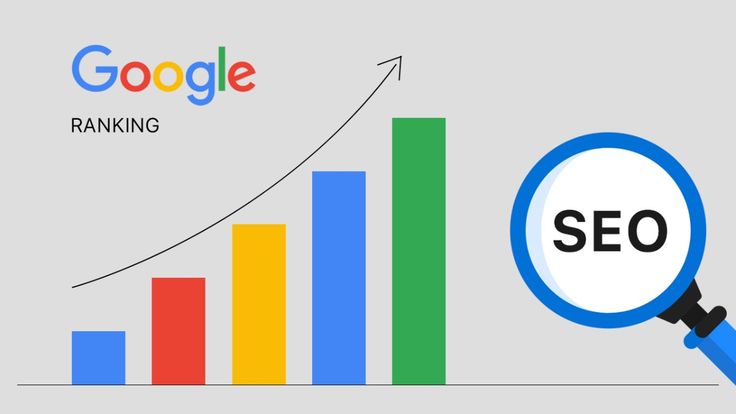
E-E-A-T SEO factors explained
One of the strongest ranking frameworks today is E-E-A-T SEO factors explained: Experience, Expertise, Authoritativeness, and Trustworthiness.
Human-written content naturally aligns better with these principles because it often includes real experience, opinions, and verified knowledge.
AI content can struggle in this area unless it is carefully reviewed and enriched with human expertise. the AI content rank on Google improves when AI content is edited with human expertise.
Content originality and ranking signals
Content originality and ranking signals play a major role in determining visibility. Search engines reward unique perspectives and penalize duplicated or generic content.
Human writers are more likely to create original insights, examples, and storytelling elements that differentiate their content.
This originality improves rankings and strengthens long-term SEO performance. Search engines decide the AI content rank on Google using trust, authority, and originality factors.
Engagement metrics in SEO ranking
Engagement plays a critical role in rankings. Engagement metrics in SEO ranking include time on page, click-through rate, scroll depth, and interaction levels.
Human-written content tends to perform better because it feels more natural and relatable, encouraging users to stay longer.
AI content may attract clicks but often struggles to maintain engagement if it lacks depth. the AI content rank on Google can be high if the content provides real value to users.

User experience content quality importance
User experience content quality is now a core ranking factor. Google evaluates how easy it is for users to read, understand, and interact with content.
Human writers naturally structure content in a way that flows better and connects emotionally with readers.
This improves satisfaction and reduces bounce rates, which positively impacts SEO performance.
Content authenticity in search results
Authenticity is becoming a major ranking differentiator. Content authenticity in search results refers to how genuine and trustworthy content appears to users.
Human-written blogs often feel more authentic because they include real opinions, experiences, and context.
100 Local Network emphasizes that authenticity builds long-term trust with both users and search engines.
AI content detection by Google
There is ongoing discussion around AI content detection by Google. While Google does not explicitly penalize AI-generated content, it evaluates quality signals that often expose low-effort automation.
If content lacks originality, depth, or engagement, it may be ranked lower regardless of how it was created.
This is why human editing and optimization remain essential.
Search intent optimization strategies
Successful SEO today depends heavily on search intent optimization strategies. Content must match what users are actually looking for, not just target keywords.
Human writers are better at understanding intent because they can interpret context, emotion, and real user needs.
AI tools can assist, but human direction is necessary for accuracy.
Bounce rate and ranking factors
Bounce rate and ranking factors are closely linked to content quality. If users leave a page quickly, it signals that the content did not meet expectations.
Human-written content often reduces bounce rate by providing clearer answers and more engaging storytelling.
This leads to stronger SEO performance over time.
Content depth and readability SEO
Search engines prefer content depth and readability SEO because it improves user satisfaction.
Human writers naturally create more structured, detailed, and readable content compared to unedited AI outputs.
Deep, well-organized content helps users find answers quickly and encourages longer engagement.

Final thoughts
The debate around human written content vs AI content SEO is not about replacing one with the other, but about understanding how quality is measured in modern search systems.
100 Local Network highlights that while AI is a powerful tool for scaling content production, human creativity, experience, and editorial judgment are still essential for ranking success.
From Google content quality guidelines 2026 to E-E-A-T SEO factors explained, search engines are clearly prioritizing content that feels real, helpful, and trustworthy.
Businesses that combine AI efficiency with human expertise will achieve the strongest long-term SEO performance. In 2026, the AI content rank on Google is influenced by E-E-A-T and content quality signals.
Does AI content rank on Google?
Yes, but only if it is high-quality, original, and enhanced with human editing.
Why do human written blogs rank higher?
Because they provide better engagement, originality, and real user value.
What is E-E-A-T in SEO?
It stands for Experience, Expertise, Authoritativeness, and Trustworthiness.
Can AI replace human writers in SEO?
No, AI can assist but human input is still essential for ranking success.